
The short answer
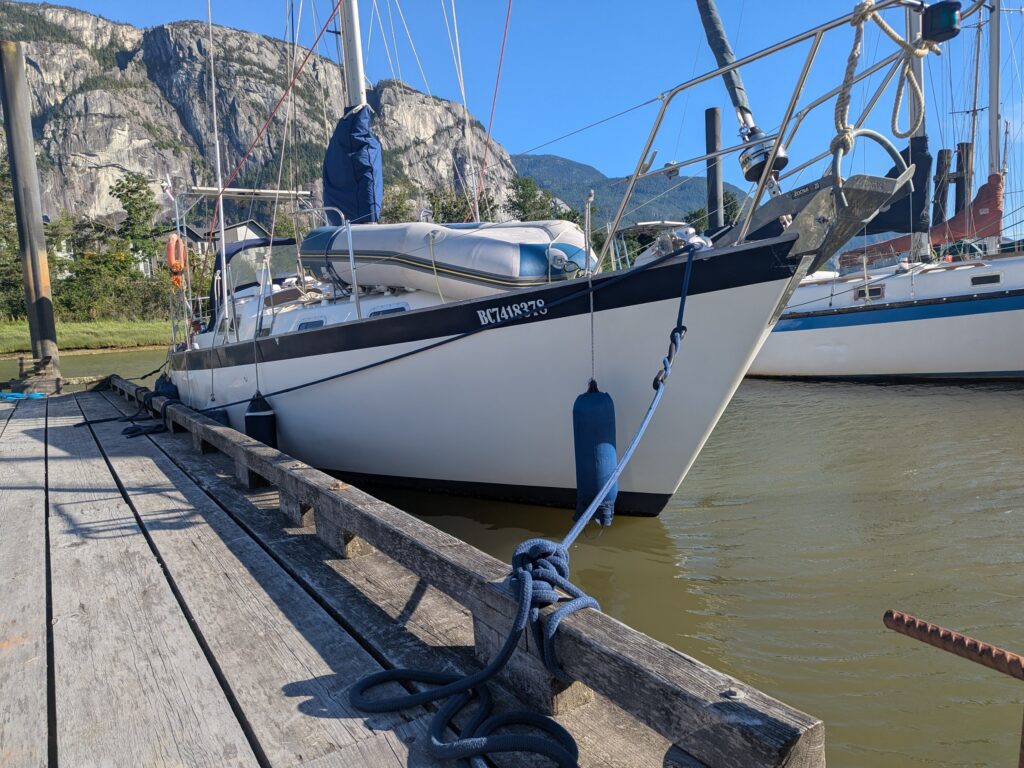
Sailboat docking confidence comes down to two things: understanding the principles of manoeuvring a boat under power in close quarters, and then getting enough repetitions that those principles become second nature.
Docking seems to strike fear into the hearts of sailors more than almost anything else. When I ask students what part of sailing they feel least confident about, docking is probably the answer I hear most often.
There are good reasons for that. It feels high-stakes. There are boats, docks and expensive things nearby. There is usually an audience. And unlike sailing itself, you may only dock once at the beginning and once at the end of your day.
So you simply do not get that many chances to practise.
- Understand the boat and the conditions
- Inspect, plan and brief before committing
- Keep an escape plan ready
- Practise enough useful repetitions to build confidence
Why good sailors can still struggle with docking
One of my favourite examples comes from marinas in Croatia.
Some of the marineros there are absolute stars at handling boats in close quarters. It can be mind-boggling to watch where they can squeeze a yacht in a blow, and how controlled the whole manoeuvre is.
That does not necessarily mean they are better sailors. The difference is that they spend their days docking boats. All day, every day.
Meanwhile, you can have a very experienced offshore sailor who has sailed around the world but docks once a month or once every couple of months. They may be infinitely more experienced in passage making, sailing and skippering, but their docking can still be rusty.
Docking is a specific skill, and repetitions build it up.
But repetition alone is not enough. First you need to understand what you are trying to do.
The three docking mistakes I see most often
1. Pushing an approach without proper preparation
This is probably the biggest one.
People arrive at the marina, see the berth and start manoeuvring before they have properly inspected the situation, made a plan and decided what they will do if that plan stops working.
Once you commit to an approach without that preparation, it becomes very easy to keep pushing a bad situation simply because you feel you have to finish what you started.
2. Going too slowly
You will often hear that when docking, slow is king.
I agree, with one very important qualification.
Go as slowly as you can while still maintaining proper manoeuvrability in the conditions you have.
On a calm day, in a responsive boat with an effective rudder, half a knot may give you all the control you need.
But if there is a strong wind blowing you off the dock, that may be nowhere near enough.
In a real blow, you might sometimes need several knots of speed to maintain control. That sounds fast in a marina, and it is. But going slower is not automatically safer if the wind simply takes control of the boat.
The right speed is the slowest speed that still gives you the control you need.
3. Going too fast
Of course, the opposite is just as much of a problem.
You can have excellent steering control but arrive with so much momentum that you cannot stop the boat where you need to.
So docking is a balance.
You need enough power and speed to control the boat, but not so much that you cannot stop her.
That balance changes with the characteristics of the specific boat and the conditions.
The docking process I teach: Inspect, Plan & Brief, Execute
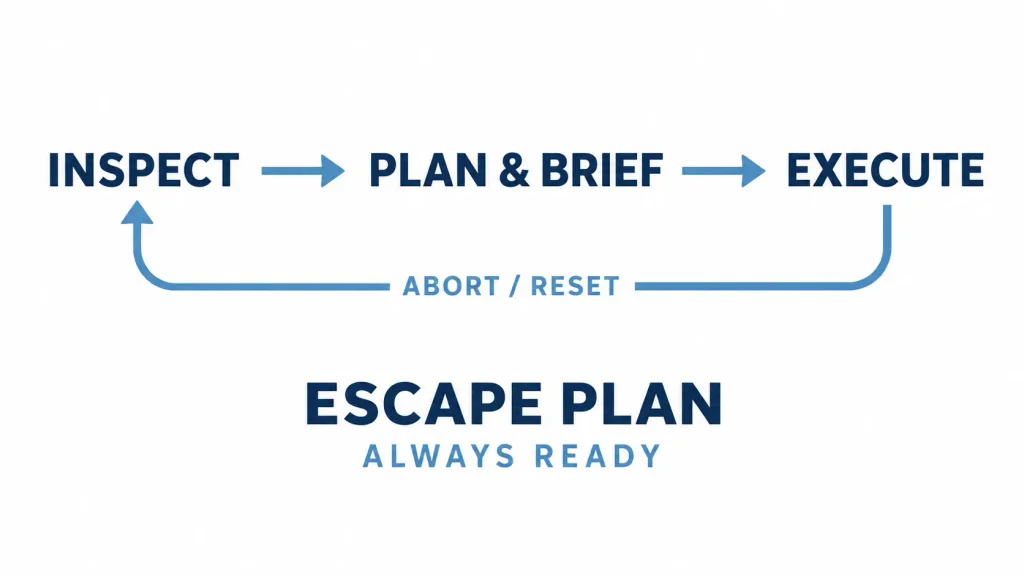
Once someone understands the basic mechanics of manoeuvring a boat under power, such as pivot points, prop wash, prop walk and windage effects, I teach a simple process:
Inspect → Plan & Brief → Execute
And throughout the whole process:
Have an escape plan.
1. Inspect
Before approaching, I need to know what I am dealing with.
What are the wind and current doing?
How much space do I actually have? Is the berth long enough? What is the pontoon or wall like? Is anything sticking out from it? How high is it, and where will the fenders need to be?
Am I tying to cleats, a bull rail, rings or something else?
What are the adjacent boats doing? Are there any other obstacles or complications?
I want to understand the berth, the conditions and how I am eventually going to secure the boat before I commit to an approach.
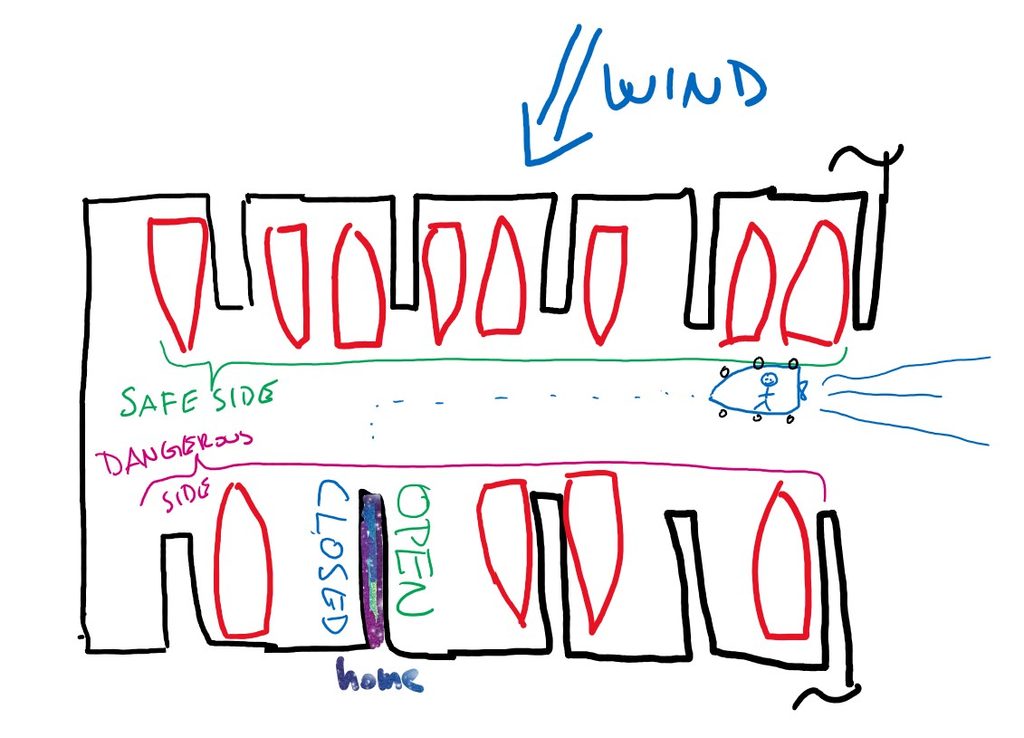
I also want to know whether the berth is open or closed to me.
By an open berth, I mean that I can see into it and approach it directly. A closed berth requires me to turn around a corner or obstruction before entering it, which can change the manoeuvre considerably.
If I have a choice, I prefer an open berth. If I do not, I think about whether I can manoeuvre first so that the berth becomes open to me before I commit to the final approach.
The more useful information you collect now, the easier the next step becomes.
2. Plan and brief
Once you know what you are dealing with, make a concise plan.
Visualize the approach.
What will the wind and current do to the boat on the way in? How much speed will you need to maintain control? When do you turn? Where do you want the boat to stop?
Then think about what could go wrong.
This is where the escape plan becomes essential.
If the approach stops working, how are you going to get out, reset and try again?
Make an escape plan.
Then brief the crew.
Get the docking lines ready. Put the fenders at the right height. Assign jobs. Make sure everybody understands the plan and knows what is expected before you enter the berth.
3. Execute
Then execute the plan.
But execution does not mean you are now committed to docking at all costs.
Watch what is actually happening.
Maybe the wind changes.
Maybe a gust catches you.
Maybe the boat does not turn quite as expected.
Maybe somebody has a tangled line.
Maybe a fender is at the wrong height.
Maybe you simply make a steering or speed mistake.
That is normal.
If reality stops matching your plan, switch to the escape plan.
Depending on the situation, that might mean stopping, reversing out, moving into clear water, allowing the wind to carry you away from danger, or using another appropriate manoeuvre.
Then reassess, adjust the plan and try again.
The exact escape is different every time.
The important part is knowing that you have one.
Without an escape plan, people tend to feel committed. They start pushing a questionable approach because they have mentally decided that they are docking the boat now.
That is when relatively small mistakes can become expensive ones.
There is nothing wrong with docking on the tenth attempt
I tell my students:
Imagine you arrive at a marina in bad weather.
The people already there may have been hiding from the wind and rain all day. They are sitting inside their boats or having a drink, waiting for something interesting to happen.
Then you appear.
Believe me, the moment a boat comes into the marina trying to dock in a blow, everybody suddenly pops out of the hatches to watch.
You are the entertainment. They are eager for a good story.
Do not give them the good story.
If you approach, decide it is not right, abort, reconsider the plan, approach again, abort again, and eventually dock safely on your tenth attempt, that is boring.
Good.
If you crash the boat because you push the first attempt, that is the story they will be telling over cocktails for the rest of the night.
There is no prize for getting in on the first try.
Knowing when to abandon an approach is part of good boat handling.
Your boat matters, but the principles still transfer
There is no single docking recipe that works for every boat and every marina. But the same core principles still transfer.
An older long-keel ocean cruiser can behave very differently from a modern cruising yacht designed with marina manoeuvring in mind.
You will often notice the biggest difference in reverse.
Some boats behave predictably astern. Others can be very challenging. On some traditional boats, trying to make the stern go exactly where you want can feel almost impossible.
Windage, momentum, underwater shape, rudder effectiveness and propeller behaviour all affect what the boat will do.
That is why part of becoming confident is also getting to know your boat.
After enough practice, you stop being surprised by her.
You start to know how quickly she stops, how much space she needs, how she kicks in reverse, what she does well, what she does badly and how she will react when the wind catches her.
The exact manoeuvre changes, but the underlying process does not.
Inspect.
Plan and brief.
Execute.
And always leave yourself a way out.
How should you practise docking?
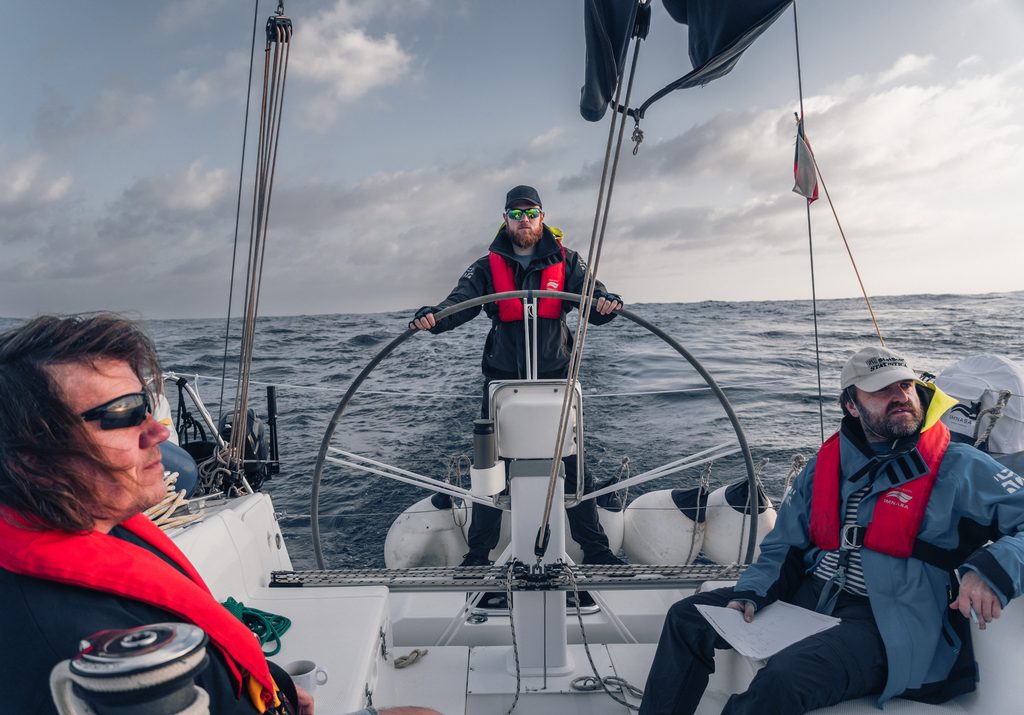
Start with easy situations.
Find an open dock with plenty of space and relatively forgiving conditions. Reduce the number of things you need to worry about and concentrate on understanding the boat.
Practise approaches.
Practise stopping.
Practise going away again.
Learn to use springs until it becomes second nature.
Repeat the same manoeuvres enough times that you start recognising what the boat is going to do before she does it.
Then gradually make things harder.
Try different wind directions, more wind, current and more constrained approaches.
The aim is not to memorise a collection of complicated tricks.
It is to become confident enough in the basic principles that you can look at a new situation, make a plan and adapt.
That is what meaningful progress looks like to me.
Can docking lessons or private coaching help?
Yes, particularly if you already sail but simply have not had enough close-quarters practice.
Focused coaching can speed the process up substantially because it does more than give you extra repetitions.
A good instructor can make sure you understand the principles first, then watch how you apply them and give you immediate feedback so you can improve on your next run.
Maybe you misunderstood how the wind will affect the bow.
Maybe you are carrying too little speed to maintain control.
Maybe you are carrying too much momentum.
Maybe your plan is good, but you are chickening out too early.
Maybe you are too bold and someone needs to step in to prevent a dangerous approach.
Without feedback, you can practise the same mistake twenty times.
With somebody experienced beside you, you can understand what is happening, correct it, and then continue practising on your own with much more confidence.
That can reduce the time, effort and risk involved in building the skill.
It still takes repetitions. One lesson does not magically make somebody an expert at docking.
But good coaching can make those repetitions much more useful.
The goal is not the perfect docking
A confident skipper is not somebody who makes every approach perfect.
It is somebody who understands the boat, reads the situation, makes a sensible plan and recognises early when that plan is not working.
Often the best docking decision is to stop and try again.
Learn the principles. Practise them in forgiving situations. Get to know your boat. Gradually increase the difficulty.
Then get the repetitions in.
Build confidence where it matters
If docking or close-quarters handling is the part of sailing that is holding you back, focused private training can be built around the problem you actually need to solve.